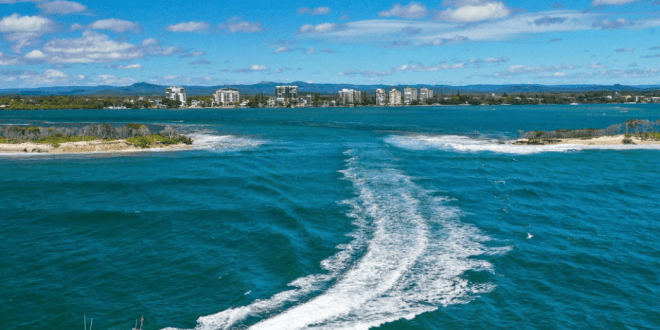
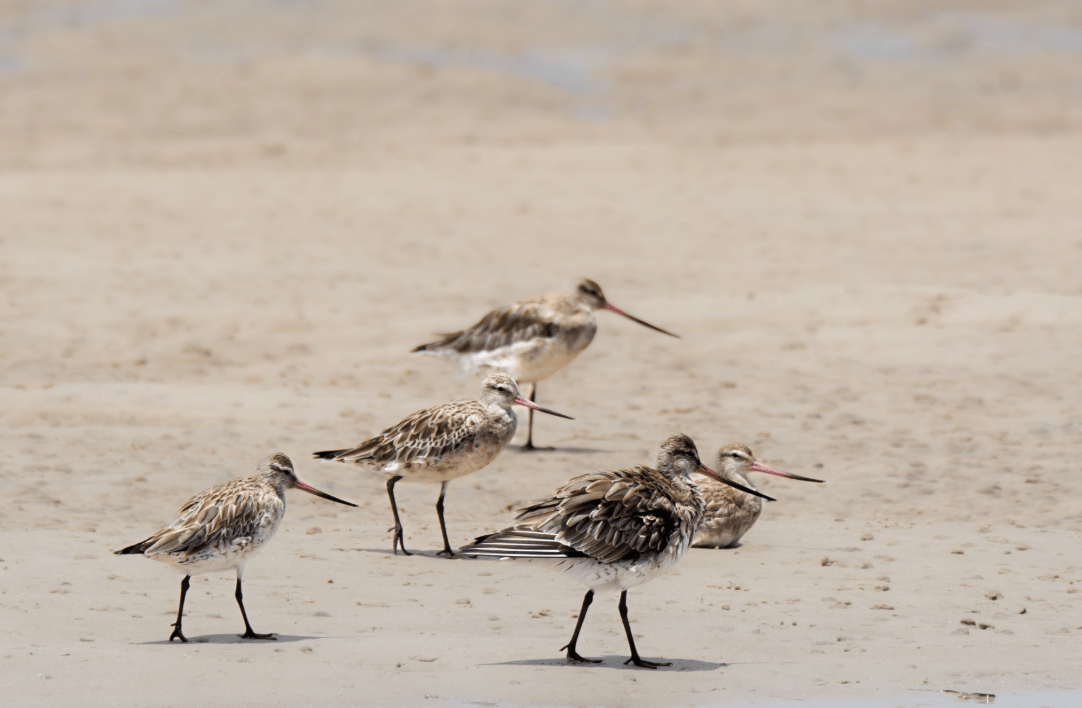
From today until May next year, a small section of Maroochy North Shore will be off-limits to dogs to allow shorebirds space to feed, rest and recover.
Migratory shorebirds are the world’s most threatened group of birds and their numbers are in steady decline.
While some threats like H5 bird flu are impossible to control, giving them space to rest and recover in their prime feeding grounds is a meaningful option well within our grasp.
The seasonal closure provides clearly defined areas allowing both dogs and shorebirds room to enjoy the area.
Division 8 Councillor Taylor Bunnag said the seasonal exclusion zone affected the southern tip of the spit only.
“The entire stretch of beach, from Pincushion Island all the way north to beach access 132 is still a year-round fully dog off-leash area,” Cr Bunnag said.
“The off-leash area on the river side of north shore at beach access 136 is also unchanged.
“To ensure dog walkers still get to enjoy the loop trail they love, Council is formalising an existing goat track to create the ‘Pincushion Trail’.
“The trail features way-finding signage and takes walkers from the beach side at Pincushion Island, across the spit to the river.”
All beach access tracks and trails through the conservation area are on-leash only.
A Sunshine Coast Council Conservation Officer said before 2006, Maroochy North Shore spit was the most important roost area for shorebirds in the lower Maroochy River catchment, with Goat Island and Nojoor Road providing an important alternative roost sites.
“Regular disturbances from people, dogs, vehicles and watercraft have made the north shore an unsuitable roost and the birds now congregate on the only remaining site at nearby Goat Island,” the officer said.
“When shorebirds are disturbed without a secondary roost to escape to, they just fly around and wait for the disturbance to pass.
“With such a short time to rest and recover their body weight, any disturbance wastes precious energy and laid down fat, hindering their ability to make the return journey to the Arctic.
“These birds are listed as threatened with one species critically endangered, and we’ve been noticing a steady decline in numbers each year.
“This is one of the key issues the seasonal exclusion zone is intended to help address.
“We’ll be carefully monitoring the success of the program and whether removing the threat of dogs will encourage the birds back to North Shore.
“A camera will monitor the exclusion zone and provide essential data so we can better understand if and how the birds use the site.
“Conservation outcomes take time, but we’re hopeful the seasonal exclusion zone will encourage shorebirds to reacquaint themselves with the site, with any increase in their use of the area considered a positive result.”
In 2023, to understand how to address this issue, Council partnered with the University of Queensland and the local community, to find a solution.
More than 2000 people took part in an online and in-person study which sought to understand who used the area, where they lived, how they used North Shore and what they valued about the area.
Restricting dogs during shorebird periods was the most common suggestion for protecting migratory shorebirds, with nearly three-quarters of in-person respondents and two thirds of online respondents suggesting this as an option.
More than 85% of respondents considered migratory shorebird protection as important and were keen to see more education and information about these special visitors.